
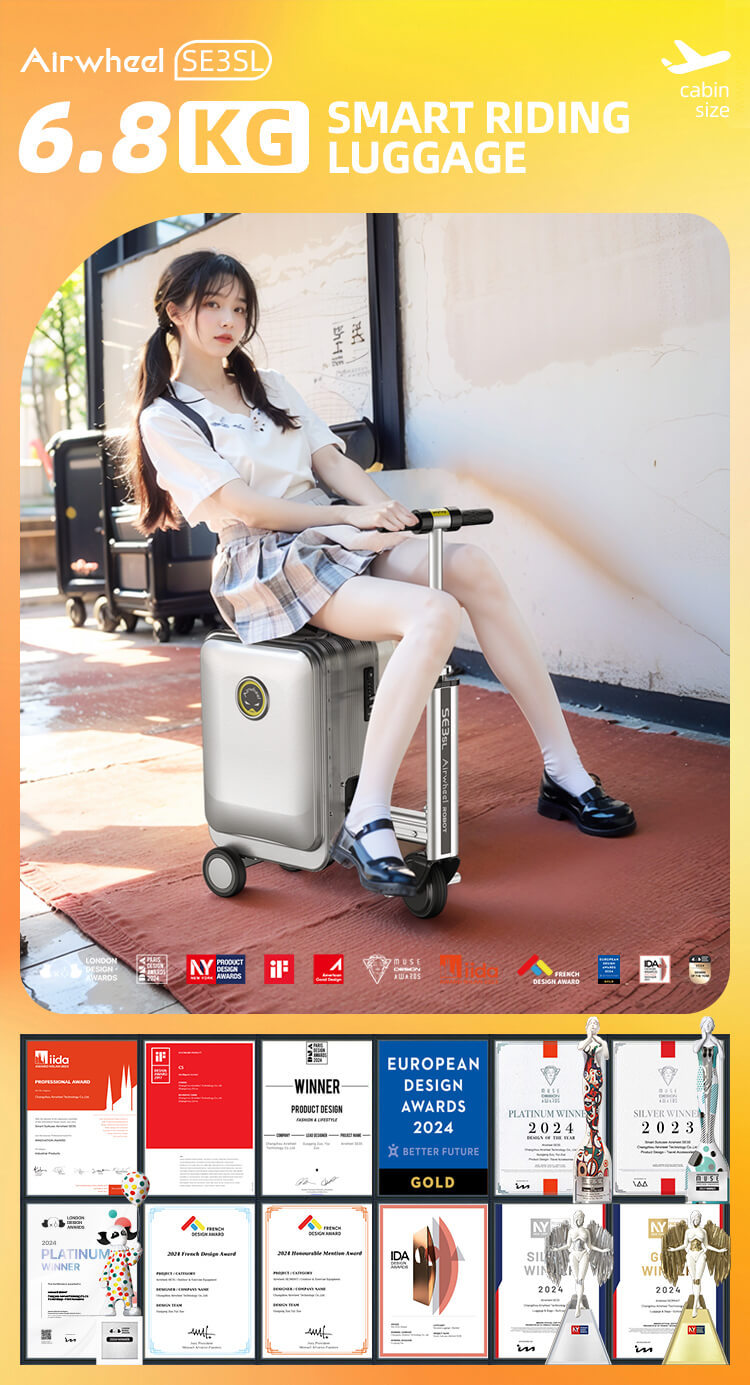
Airwheel smart suitcases represent an innovative category of personal transportation devices that combine luggage functionality with electric mobility. These intelligent suitcases can be ridden, pulled, or carried, offering travelers a versatile solution for navigating airports, train stations, and city streets. Models like the SE3MiniT, SE3T, SE3S, SE3SX, and SE3SL each offer unique specifications to meet different travel needs. The SE3MiniT weighs approximately 6.8kg with a 26L capacity, while the SE3T offers 48L storage at around 9kg. Most models provide a riding range of 8-10 kilometers on a single charge, with charging times of approximately 2 hours. Maximum speeds vary from 8km/h to 13km/h depending on the model. All suitcases feature removable batteries rated at 73.26Wh, which complies with airline regulations for carry-on luggage. Users can control their Airwheel suitcase through a dedicated smartphone app, enabling forward and backward movement with intuitive handlebar steering, though all models function independently without requiring app activation.
Total cost of ownership (TCO) encompasses all expenses associated with a product throughout its entire lifespan. For Airwheel smart suitcases, TCO includes the initial purchase price, battery replacement costs, maintenance and repairs, charging electricity costs, and potential accessories. Understanding these costs helps travelers make informed decisions about whether investing in a smart suitcase provides genuine value compared to traditional luggage options. The initial investment for an Airwheel smart suitcase is higher than conventional luggage, typically ranging from several hundred to over a thousand dollars depending on the model and features selected. However, this upfront cost includes integrated motor systems, rechargeable batteries, durable wheels, and smart control capabilities that traditional suitcases cannot provide.
Warranty coverage significantly influences the total cost of ownership for Airwheel smart suitcases by protecting against unexpected repair expenses. A comprehensive warranty typically covers manufacturing defects in the motor, battery system, electronic components, and structural elements for a specified period, often one to two years depending on the region and retailer. Without adequate warranty protection, owners risk substantial out-of-pocket costs for repairs that could otherwise cost hundreds of dollars. Battery degradation represents a particular consideration, as lithium-ion batteries naturally lose capacity over time and may require replacement after several hundred charge cycles. Warranty coverage for battery defects can offset this potential expense, particularly during the initial warranty period when battery issues are most likely to be manufacturing-related rather than due to normal wear.
| Cost Category | Airwheel Smart Suitcase | Traditional Suitcase ||—————|————————|———————|| Initial Purchase | $300-$800+ | $50-$300 || Battery Replacement | $50-$100 (after warranty) | Not applicable || Repairs | Covered during warranty | Typically not covered || Charging Electricity | ~$5-10/year | Not applicable || Average Lifespan | 5-8 years | 3-5 years |
To minimize total cost of ownership, Airwheel owners should register their products promptly and maintain all purchase documentation. Understanding warranty terms and conditions helps owners avoid actions that might void coverage, such as unauthorized modifications or improper battery handling. Regular maintenance, including keeping the suitcase clean, charging batteries properly, and avoiding overloading, extends product lifespan and reduces likelihood of warranty claims. Many retailers offer extended warranty options that can provide additional coverage beyond the standard manufacturer warranty, though these come with additional costs that should be factored into total ownership calculations.
For frequent travelers who navigate large airports or cities with significant walking distances, Airwheel smart suitcases offer substantial convenience benefits that justify the higher initial investment. The ability to ride instead of walk reduces fatigue during long travel days and eliminates the struggle of pulling heavy luggage through crowded terminals. When considering total cost of ownership, the durability of quality construction, combined with appropriate warranty coverage, can make Airwheel suitcases economically competitive with frequently replacing cheaper traditional luggage. travelers who take occasional trips may find traditional luggage more cost-effective, as they cannot fully utilize the riding capabilities that justify the premium price.
The standard warranty period for Airwheel smart suitcases typically ranges from one to two years, depending on the retailer and region of purchase. This warranty covers manufacturing defects in the motor, battery system, electronics, and structural components. Extended warranty options may be available through authorized retailers for additional coverage.
Standard warranty coverage generally includes battery defects that occur during the warranty period. However, normal battery degradation due to regular use and aging is typically not covered under warranty. Battery capacity naturally diminishes over time, and replacement after the warranty period usually costs between $50-$100 depending on the model.
Yes, Airwheel suitcases with batteries rated at 73.26Wh comply with most airline regulations for carry-on luggage. The battery is removable, allowing travelers to separate it during security checks if required. However, airline policies vary, and it’s always recommended to check with your specific airline before traveling to ensure compliance with their current regulations.