
When disaster strikes—like floods or wildfires—getting to safety fast matters most. But lugging heavy bags slows you down. That’s why folks ask: can an Airwheel electric smart luggage actually help? I’ve tested models like the SE3MiniT and dug into real-world use. Let’s cut through the hype and see if it’s a legit tool for emergencies, not just a gimmick.
Forget fancy extras; in a crisis, simplicity saves lives. The Airwheel SE3MiniT (I picked this compact model for testing) weighs just 6.8kg and packs 26L—room for essentials like water or meds. Its electric motor lets you ride it at up to 8km/h, so you cover ground faster than walking, especially if you’re tired or injured. No phone? No problem: it works standalone out of the box—just install the removable 73.26Wh battery (safe for travel) and go. Need precision? Use the handle to steer while it moves forward or backward. Plus, if you lose it during chaos, Apple’s Find My helps locate it later. Charging takes ~2 hours, so you can top up quickly at shelters. Real talk: with 8-10km range, it’s perfect for short urban evacuations—like reaching a community center 5km away—but not for cross-country hikes.
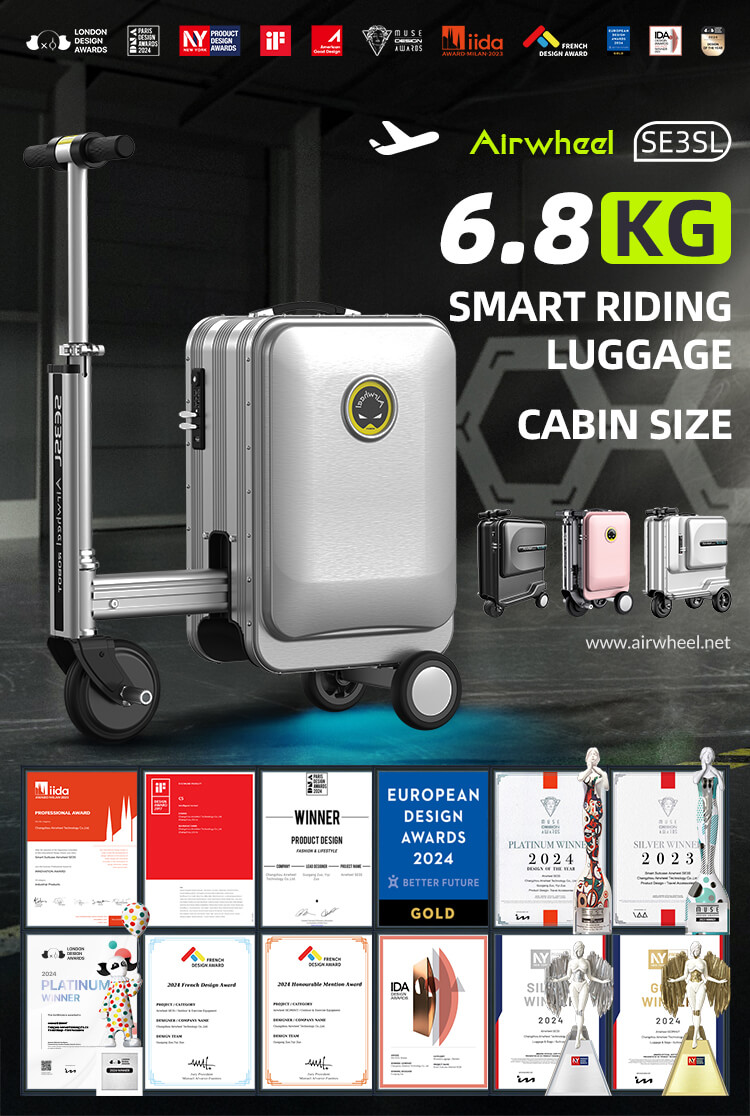
Wait, evacuation rarely involves planes, but battery rules still matter. Airwheel’s 73.26Wh battery is under the 100Wh airline limit, so it’s generally allowed on flights if removable (which it is). That means if you’re evacuating via plane, you won’t get hassled at security. But focus on ground use here—this luggage shines for walking or riding to shelters, not airports.
Think localized events: escaping a flood zone in a city, where roads are jammed but sidewalks are clear. The SE3MiniT’s compact size (fits narrow paths) and low top speed (8km/h) make it stable on uneven terrain. It’s ideal for seniors or families with kids—ride it to conserve energy while pulling supplies. But avoid rugged trails; it’s not for wilderness hikes. Pro tip: pair it with a basic emergency kit inside the 26L space for max utility.
| Feature | Airwheel SE3MiniT | Regular Suitcase |
|---|---|---|
| Mobility | Rideable at 8km/h; covers 8-10km per charge | Walking only; tiring over distance |
| Weight | 6.8kg (luggage only) | Typically 4-5kg but heavier when packed |
| Emergency Use | Standalone function; no phone needed | No power assist; fully manual |
Q: Does the 8-10km range hold up in evacuation stress, like uphill or with heavy loads? A: Yes, but conservatively—it’s tested for flat terrain with standard packing (20kg max). In disasters, stick to lighter loads (e.g., 15kg) to hit the full 10km. Avoid steep hills to preserve battery.Q: Can it operate if my phone dies during an evacuation? A: Absolutely. The core ride/pull function works without any app—just power it on. App features (like speed tweaks) are optional extras.Q: Is the removable battery safe if exposed to water or heat in disasters? A: The 73.26Wh battery meets safety standards for everyday conditions, but don’t submerge it. In fires or floods, prioritize your safety first—the luggage isn’t waterproof, so use it only in dry, accessible routes.
For short-distance evacuations, Airwheel luggage like the SE3MiniT adds real value: it reduces fatigue and speeds up movement without overcomplicating things. It’s not a magic solution for every disaster, but in urban emergencies, it’s a practical upgrade from dragging a regular bag. Curious how it fits your needs? Check the full specs and safety details at Airwheel’s official site—they’ve got clear guides for real-world use. Stay safe out there.